

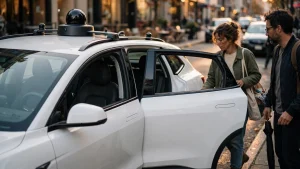
The first passenger did what every first passenger does. She climbed into the back seat, reached for a handle that isn’t there, and laughed. There was no driver in the Waymo. Not a test specialist, not a safety monitor, nobody. Just an empty front seat and the streets of Detroit moving past the windows. Waymo confirmed to the Detroit Free Press on October 6 that it is now operating fully driverless vehicles in the city, with rides currently limited to employees.
Public service comes later, and that’s by design. Less than a month ago, trained specialists were still sitting behind the wheel in Detroit. The company ran its usual routine: months of mapping, supervised testing, talks with local officials, neighborhood outreach.
The hardest decision in the business
Taking the person out of the driver’s seat is the one call an autonomous-vehicle company can’t take back. Everything before it is practice. Waymo spokesman Chris Bonelli told the Free Press the team spent months getting the Waymo Driver familiar with Detroit before going driverless. Familiar is doing a lot of work in that sentence. It means the car’s maps and models have now seen enough of the city’s streets to run without a chaperone.
The same playbook ran in San Francisco, Los Angeles, Austin and Phoenix, where Waymo has operated commercial service since launching its first robotaxi service back in 2020. Announce early, drive supervised miles, talk to the city, win the neighborhood, then go driverless. It is slower than flipping a switch. That is the point. Trust is the scarce resource here, and Detroit is being earned the slow way.
Where the cars are running
The launch area covers downtown plus Corktown, Midtown, Hamtramck and Indian Village, with expansion across the metro promised over time. The mix is deliberate. Downtown brings density, Midtown brings the university and hospital corridor, Hamtramck and Indian Village bring real residential streets, real potholes, real parking chaos. A robot that can handle all of that can handle the suburbs.
Then comes the exam no other Waymo city can offer: winter. Lake-effect snow, salt-crusted sensors, lane markings buried under slush. This is the test other cities don’t give, and employee-only service is exactly the right way to sit it. Hundreds of in-house rides in real weather before a single paying customer gets in.
The Motor City angle
Detroit invented the car business as we know it: the assembly line, the suburbs, the idea of a city built around the automobile. Now it is hosting the business model where the car comes to you, drives itself, and never needs a parking spot. There is a symbolism here that Waymo didn’t have to manufacture.
The numbers behind the pitch travel well. Waymo has logged more than 270 million fully autonomous miles, and its data shows 95 percent fewer crashes causing serious or fatal injury compared with human drivers. That’s the statistic regulators ask about in every new city, and it’s why the expansion approvals keep coming.
What it means for travelers, cities and investors
For travelers, Detroit fills a gap in the map. Waymo’s network now spans both coasts and the middle: San Francisco, Los Angeles, Austin, Phoenix and Detroit. A business traveler who hails robotaxis in Phoenix can reasonably expect the same option in the auto capital. And when your travels take you to Los Angeles for awards season, here’s how the city does Oscar night — autonomous rides are just the next convenience on the list.
For cities, Detroit’s process is the template worth copying. Announce early, run supervised miles, coordinate with officials, engage neighborhoods, then go driverless. Public trust is the scarce resource in this business, and Detroit is being won the slow way.
For investors, the story is cadence. Robotaxis are becoming a routine headline rather than a science experiment. The companies that survive this phase are the ones that can expand city by city without a drama in each one. Waymo just did it again.
The Motor City spent a century perfecting the driver. It may spend the next one perfecting the absence of one. Employee rides today, public rides tomorrow.













Be First to Comment