
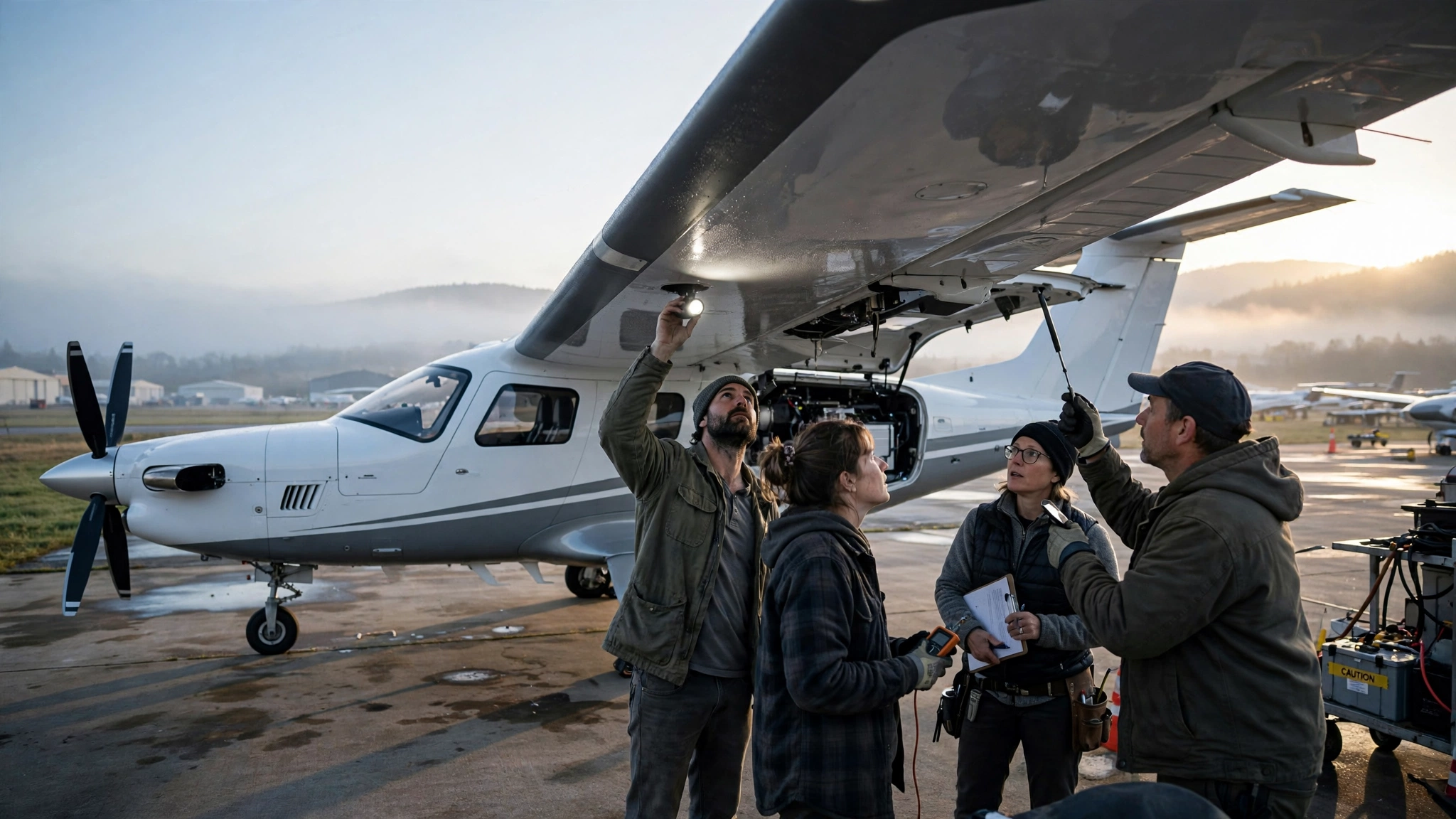
America’s small airports have been quietly fading for years. Hundreds of regional airfields that once buzzed with scheduled service now see a handful of private planes a day, or nothing at all. A Canadian company reported on October 9, 2026 that it may be building the machine to reverse that trend – and one of its key partners is American.
Horizon Aircraft, listed on NASDAQ as HOVR, announced in its fiscal 2027 first-quarter results that it holds more than $70 million in cash as of August 31, 2026, enough for over 24 months of runway. The company says it is on track to complete its full-scale Cavorite X7 demonstrator by the end of the first quarter of calendar 2027, followed by ground testing, taxi testing, and then flight testing.
Small airports, big comeback
The Cavorite X7 is a seven-seat hybrid-electric aircraft designed to cruise at around 250 mph with a range of roughly 500 miles. That combination – the passenger count of a small regional turboprop, the speed of one, and hybrid-electric efficiency – is aimed squarely at the missing middle of American aviation: routes too short or too thin for today’s airliners, connecting cities that lost their scheduled service.
Think about the geography. A 500-mile radius from a regional airport covers an enormous share of the US population: Nashville to Chicago, Denver to Salt Lake City, Minneapolis to St. Louis. These are city pairs where driving takes the better part of a day and where major airlines offer thin or inconvenient service. A quiet, efficient seven-seater operating from local airfields could stitch those markets back together, one route at a time.
Why icing certification changes everything
One detail in Horizon’s announcement deserves more attention than it has gotten: the company is pursuing certification for flight into known icing conditions. That sounds technical, but it is the difference between a fair-weather demonstrator and a working airplane.
Winter is the great enemy of small aircraft. Ice forming on wings and propellers can bring down planes that are not certified to handle it, which is why many regional services in New England, the Upper Midwest, and the Mountain West face seasonal restrictions or simply shut down routes in the cold months. An aircraft certified to fly safely through icing can operate year-round schedules – the kind of reliability that makes routes commercially viable instead of seasonally hopeful. For northern US states, this single certification goal may matter more than the hybrid powertrain itself.
The American connection
Horizon is not going it alone. Its partner list includes BETA Technologies, the American electric-aviation company that has become one of the industry’s most serious players, alongside Marshall Aerospace, RAMPF Composite Solutions, and North Aircraft Industries. Certification discussions with Transport Canada are already underway.
The build plan is deliberately staged: two full-scale prototypes, with the conventional-takeoff-and-landing version first and the vertical-takeoff-and-landing variant to follow. That sequencing is smart engineering. Prove the airframe, the hybrid system, and the flight envelope the conventional way, then add the complexity of vertical lift. It is the kind of disciplined, step-by-step program that separates companies that fly from companies that only render.
A billion dollars of paper demand
Perhaps the most striking number in the announcement: signed letters of intent exceeding $1 billion in potential sales, representing up to 200 aircraft purchases plus five leases. LOIs are not orders, and aviation history is littered with impressive LOI totals that never converted. But $1 billion in stated interest, against a company with $70 million in the bank and a demonstrator 18 months out, tells you something about the hunger for this exact aircraft.
CEO Brandon Robinson’s comment was measured – the company is on track “to complete the full-scale demonstrator around the end of the first quarter of calendar 2027, followed by ground testing and then flight testing.” No hype, no impossible timelines. Just a plan.
What it means for American travelers
If the Cavorite X7 works as designed, the payoff lands in places the big airlines forgot: the college town with a beautiful empty terminal, the manufacturing hub an hour’s drive from the nearest hub airport, the mountain community that goes quiet every January. Hybrid-electric regional flight promises lower operating costs, lower noise, and lower emissions – exactly the economics that could make thin routes pencil out again.
America invented regional aviation and then, slowly, let it wither. Machines like the Cavorite X7 – with an American partner helping build them – could be the way back.

















Be First to Comment