
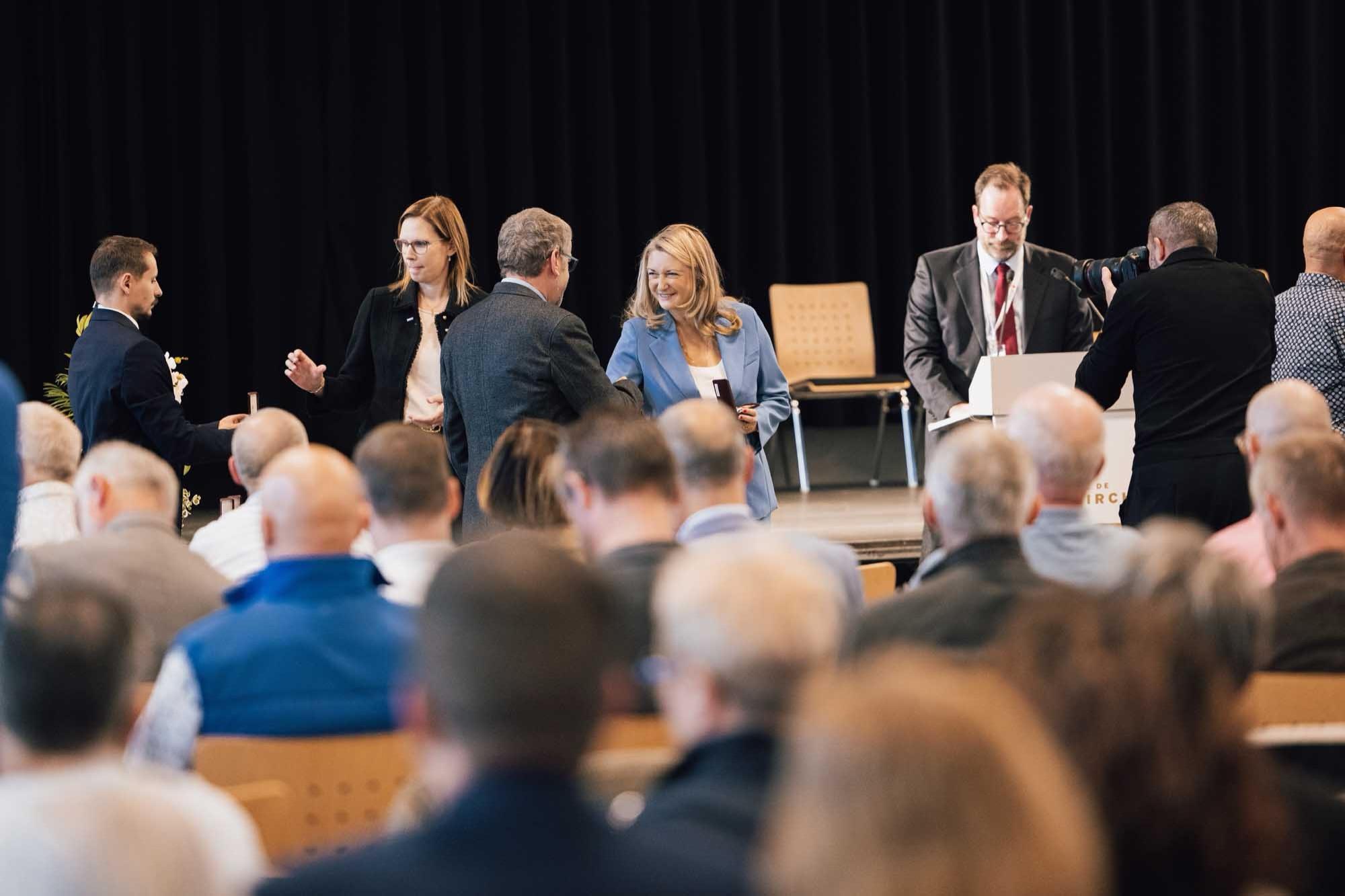
There are ceremonies that feel like pageantry, and then there are ceremonies that feel like a community rolling up its sleeves. What happened Saturday in the northern Luxembourg town of Diekirch was firmly the second kind. Grand Duchess Stéphanie of Luxembourg, in her role as President of the Luxembourg Red Cross, handed out 160 medals to meritorious blood donors, one after another, in front of a hall full of people who give away a part of themselves so strangers can live.
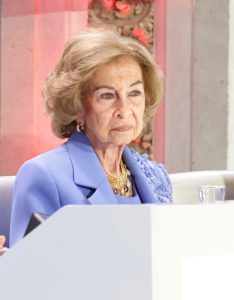
The Grand Duchess, smiling in a light blue blazer, presented each medal in its case herself. According to the official account from the Grand Ducal Court, published in both Luxembourgish and French, she thanked the donors for their generosity and their commitment, which she said contributes every single day to saving human lives. It was not a line for the cameras. It was the whole point of the day.
The ceremony drew the town’s top figures as well. Health Minister Martine Deprez attended, alongside Diekirch’s mayor, Charles Weiler, underscoring that blood donation in the Grand Duchy is not a private hobby but a public health priority. And the occasion was deliberately used to hammer home a message that applies well beyond Luxembourg’s borders: regular blood donation is indispensable. Hospitals depend on it. Shortages can only be prevented when donors show up again and again, keeping the reserves full.
For anyone looking to learn more, Luxembourg’s national donation portal, dondusang.lu, carries the full picture. It is the kind of simple, one-stop resource every country could use, and it points donors exactly where they are needed.
A message that crosses the Atlantic
Here is where the story stops being only Luxembourg’s. The message the Grand Duchess carried into that Diekirch hall on Saturday is identical to the one heard every week in high school gyms, church basements, and office parking lots across the United States. America and Luxembourg share a blood-donation tradition that runs deep. The American Red Cross and the country’s countless local drives have built giving blood into the rhythm of American civic life, and the reasons are exactly the same: hospital shelves empty fast, and the only supply chain that cannot be manufactured is a neighbor’s arm.
European royalty have long lent their names to the cause, and this week brought another example of a European monarch connecting with Americans on home ground, when a Swedish king’s axe visit carried lessons for America’s own craft revival. In Diekirch, the Grand Duchess did the same kind of quiet cultural diplomacy, except her tool was a medal case instead of a forge.
The numbers tell a universal story. A single donation can help more than one patient, and regular donors, the kind honored in Diekirch, form the backbone that hospitals count on when emergencies spike demand. Shortages are never a problem a country solves once. They are prevented donation by donation, town by town, whether that town is in the Ardennes or in Ohio.
A busy season for the Grand Duchess
The blood donor ceremony caps a remarkably active stretch for the new Grand Duchess. Just days earlier she visited the Pro Familia foundation in Esch-sur-Alzette, and the grand ducal couple paid a visit to ATD Quart Monde in Beggen, the anti-poverty association that has worked in the neighborhood since 1977, accompanied by Minister Max Hahn. It is a pattern worth noting: since Grand Duke Guillaume’s accession on 3 October 2025, the court has made a steady habit of showing up where the quiet work gets done, at foundations, associations, and now a blood donor hall in the north.
There is something refreshing about a royal engagement measured not in gala dinners but in pints given. The medals themselves are modest, small tokens in red cases, and that is precisely the point. Blood donors do not give for the recognition. They give because somebody’s surgery, somebody’s transfusion, somebody’s bad afternoon depends on it. On Saturday in Diekirch, Luxembourg said thank you properly, in person, with the country’s health minister and the town’s mayor in the room to prove how seriously it takes the gesture.
It has been a week of genuinely encouraging news across the board. American researchers cheered a once-a-month treatment that could change schizophrenia care, and scientists in Sydney mapped the recipe behind conservation’s brightest success stories. The Diekirch ceremony belongs in that company: good news, plainly stated, about ordinary people doing the one thing machines still cannot do for us.
If Saturday’s ceremony sends anyone anywhere, let it be to their local donation center. The medals were Luxembourg’s. The need is everywhere.
Photo credit: Maison du Grand-Duc via @courgrandducale



















Be First to Comment